

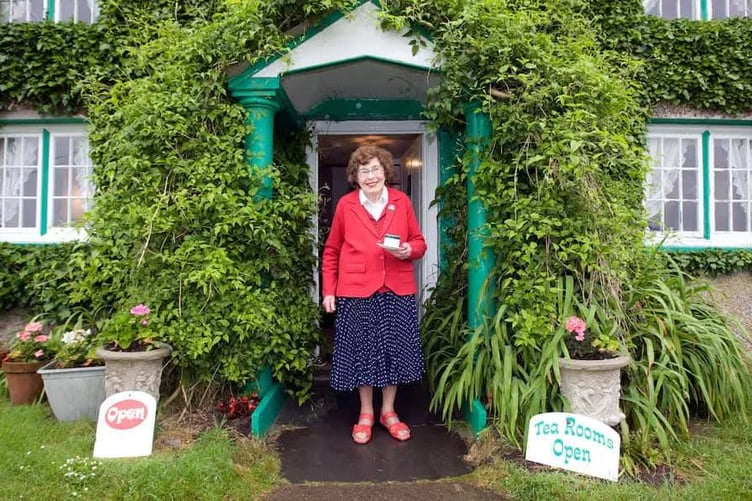
Ye Olde Worlde Café - Bosherston’s most missed tearoom and garden - has a long and much loved history, which has been explored this month by ‘Hidden Pembrokeshire’ photographer Gareth Davies.
A favourite of locals, walkers and coach trippers alike, the old fashioned café offered extensive tea gardens in an idyllic setting a stone’s throw from the lily pools and village church.
A traditional menu included such staples as egg on toast, loose leaf tea, scones, apricot sponge and iced cake, but it was its hospitable owners that really made the place so beloved through the years.
Mr Davies writes: “The building itself began life in 1834 as a pair of estate cottages for the Stackpole Estate and later served as coastguard cottages. Built in local stone with traditional features, it became a Grade II listed building thanks to its architectural and historic value.


“In 1922 Mr and Mrs Caesar Evans opened it as a small tearoom. After Mrs Evans passed away in 1952, the café was taken over by their daughter, Vi Weston, fondly remembered by many as ‘Auntie Vi.’ She and her husband ran the café for decades, giving it the warm, homely character people still talk about today.
“It offered simple homemade food, loose leaf tea, and a warm, old fashioned atmosphere that felt like stepping back in time. Generations of visitors stopped there after exploring the Bosherston Lily Ponds or walking the coastal paths, and the café became a small but meaningful part of the local experience.
“In recent years, however, things have changed. The café has been closed throughout 2025, and the property has been undergoing significant renovation work. Current listings describe it as ‘formerly the Ye Olde Worlde Café’ and note that the building is being extended and updated, with the whole site now available to let.
“For many, its closure marks the end of an era. The café was more than a place for tea and cake, it was a little piece of Bosherston’s heritage, woven into memories of family holidays, long walks, and summer days. Whether it will reopen in the future, and in what form, remains to be seen, but its history is still very much part of the village’s character.”
Comments
This article has no comments yet. Be the first to leave a comment.