

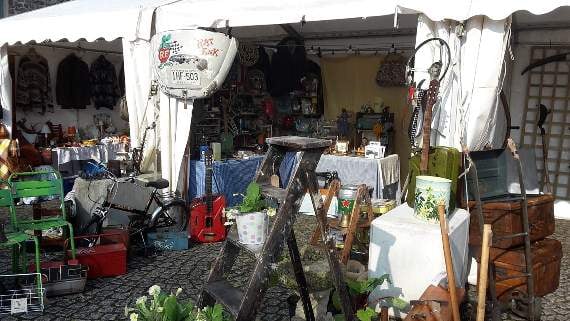
The National Botanic Garden of Wales Antiques Fair and Vintage Market has become a firm favourite with the public.
Set in the heart of the picturesque and historic Carmarthenshire and yet minutes away from the M4 corridor, lies the impressive National Botanic Garden of Wales.It’s a hidden gem , just as are the array of antiques that are on display at the Antiques Fair and Vintage market , held at the Garden on the 6th and 7th July.The fair has grown steadily over the last 9years in both size and popularity.Visitors are impressed at the variety of antiques on offer at this unique and amazing setting. It’s appeal is in the fact that visitors can wander around the gardens at leisure. The Gardens have recorded record attendance this year with the last two fairs being record breakers.
It is in the impressive Sir Norman Foster designed Glasshouse, that the fair will be show casing the Antiques Fair as well as in Principality house which is situated adjacent to the Glasshouse, Theatre Botanica , the Gallery Room and the large Wedding Marquee. The fair has also expanded into the Millennium Courtyard filling it with a Vintage Antiques Market. The Vintage market, houses smaller marquees showing off vintage toys,clothing and retro furniture, brocante, gardinalia plus numerous up cycled furniture and quirky items. This is a new and exciting addition to the established in side section of the fair
The National Botanic Garden of Wales’ fair has a reputation for discovering rare items to wet people’s appetites.From rare maps to rare paintings, these have all been found at this fair. Richard Bebb will be including some Kyffin Williams paintings and prints amongst his collection of Welsh art.It is the centenary of Kyffin’s birth and interest in his work has been heightened.


There will of course be an abundance of Welsh pottery ranging from Swansea, Glamorgan, Llanelli and the increasingly popular Ewenny. Welsh textiles will also be a main feature at the fair. There will be a large range of welsh tapestry blankets on display with their extensive colour range and intrinsic patterns. Wales is of course famous for its rich heritage in the woollen industry Woollen blankets (carthen) having been woven in Wales for centuries and a wealth of patterns was produced. Many Welsh blankets were fringed at top and bottom but a true ’carthen’ or ’fringed quilt’ was to be used as a bedspread as well as a blanket.
You will be able to find stands displaying gorgeous Victorian linen, vintage clothes, costume jewellery, and an appealing display of nostalgic interior designs and an impressive collection of books. There will also be fishing reels, collections of historic maps and garden tools. Amongst the quality stands, will be a selection of militaria stands, displaying some very unusual items from the past including rare medals, military swords and vintage fire arms.If you want to invest in that special piece of glass or a good item of jewellery or silver, then you will find them at this fair. The range is extensive. An exceptional display of impressive Worcester pieces including Stinton, will also take centre stage at the fair ,together with other collections of Wemys and Moorcroft.
Moorcroft pottery continues to be as popular as ever with collectors avidly looking for the one special piece to add to their collection.William Moorcroft started his own pottery in 1914 after working for James Macintyre for 15 years.During his time there he introduced several designs in the art nouveau style which became popular eg Claremont,Florian and Hazeldene. William’s designs had attracted the attention of the Lasenby family , owners of Libertys. They were able to help him financially to set up his own pottery.
The following years were very productive and designs such as Pomegranate, Moonlit Blue and Eventide became sought after and are still popular today.
Doulton and Ruskin potteries had developed Flambé glazes but without any designs on the finished pieces.William eventually succeeded with very high temperatures but with a high failure rate.These failures as he saw them ,are actually highly sought after because of their depth of colour.
William died in 1945 and was succeeded by his son Walter who carried on his father’s designs and his own. Work on flambé pottery continued for a while until changes in kiln design and the Clean Air Act saw an end to high fired pottery.
The recession in the 1980’s saw the family connection end and in 1986 the company was rescued by Hugh Edwards and Richard Dennis.They introduced new designs by Sally Tuffin which caught the publics eye and the regeneration began.In 1990’s a design team was introduced .they continued many of the themes that Walter introduced as well as developing their own styles.
Many of these designs will be in a Dorset’s dealers collection ion display in the Glass House He will have a wide variety exam lose of Moorcroft to illustrate the pottery’s history.One such piece will be "Eventide" circa 1920 which has a Turkic lid and a wonderful burnt orange colour.
In all, the fair is very well rounded, with a balance of furniture ranging from an extensive collection of oak furniture and period mahogany pieces, to an array of country pine. Also on display will be a fine collection of period clocks, together with the more traditional long case clocks.
The Antiques fair and Vintage market at the prestigious National Botanic Garden of Wales is on both days Saturday 6th & Sunday 7th July and can be found at Llanarthne, Carmarthenshire SA32 8HG at the end of the M4; you will find ample free parking inside the grounds. The fair opens its doors at 10.00 am and closes at 4.30 p.m.; admission is just £5 to both the gardens and the fair. Dogs are allowed to be walked on a short lead at the weekend fair .
For more information about the fairs contact Brita Rogers telephone: 01267 2202601Mobile 07790 293367 or visit the web site: www. derwenantiques.co.uk or follow us on Facebook and Twitter
Comments
This article has no comments yet. Be the first to leave a comment.