

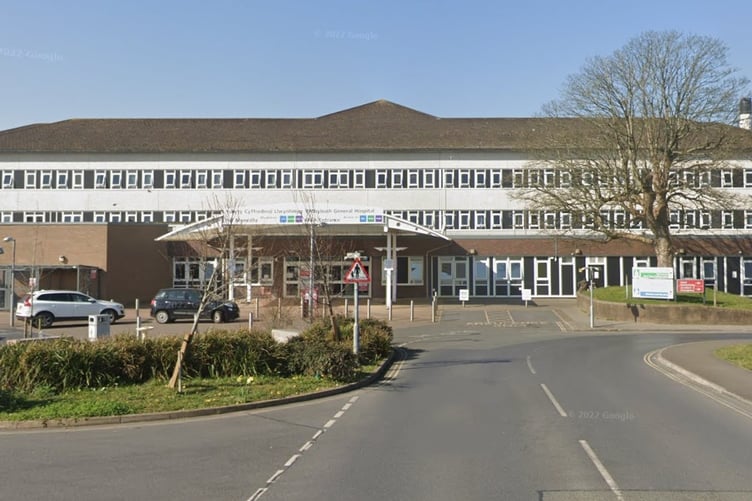
AT the Extraordinary Board meeting yesterday (February 19, 2026), Hywel Dda University Health Board decided on the next steps for its Clinical Services Plan. What follows below is the Health Board’s unedited view of that process.
The Clinical Services plan focuses on nine healthcare services most in need of support and aims at addressing fragilities, improving standards, or reducing waiting times for people in need of diagnosis and treatment. The services included are critical care, dermatology, emergency general surgery, endoscopy, ophthalmology, orthopaedics, stroke, radiology and urology.
During the summer of 2025, the Health Board consulted with its communities on options for change across the nine services and invited people to share their views and suggestions for alternative ideas on how the services could be provided across the region.
As a result of the consultation, an independent report was prepared by Opinion Research Services (ORS). The consultation report summarises more than 4,000 questionnaire responses in addition to the feedback shared at public events, staff meetings and stakeholder sessions that were attended by over 4,000 people.

At its extraordinary meeting that was held over two days, the Board carefully considered the independent consultation report alongside a range of other information. This included the latest information on workforce and service resilience, estate condition, operational pressures, regional working, new clinical standards and how services link to each other.
The Board also considered the 22 alternative options that were suggested as part of the consultation process and met hurdle criteria. Hurdle criteria are the essential conditions an alternative idea needed to meet, before it progressed for further consideration as an option presented to the Board.
During discussions, the Board also explored how some alternative options could be brought together. These options were suggested as part of the consultation, but the combination has not yet been tested against the same hurdle and scoring criteria. This was the case for stroke services.
As part of the decision-making process, options were assessed on whether they were clinically sustainable, deliverable, accessible, aligned to the Health Board’s long-term strategy, and financially sustainable. The Board also identified services where further engagement or additional information is required to understand the impacts of options before final decisions can be made. Consideration was given to the practical steps needed for implementation, including how changes would need to be phased over time.
Dr Neil Wooding, Chair of Hywel Dda University Health Board, said:
“As a Health Board, our ambition is for people to live healthier lives for longer by supporting people to keep well and preventing ill health. The decisions made today help us to address some of the services that are the most fragile and need to change to be able to deliver healthcare that is safe, sustainable, accessible, and kind.
“Thank you to everyone who took the time to share their views during the consultation. Many of the decisions taken today are based upon alternative options suggested by members of our community through our consultation, and we are grateful to everyone who has helped to shape these ideas alongside us. Our Board has approached these decisions with great care, considering the feedback, clinical evidence, workforce considerations and the wider impact to ensure the changes we make now strengthen services for the future.
“These decisions are not easy but as a Board we have a duty to ensure that our services provide the best outcomes for our patients and that they meet the highest standards.”
Lee Davies, Executive Director of Strategy and Planning added:
“We have been able to arrive at a conclusion for most services today and our teams will now work on developing implementation plans for these. Where we have seen that further engagement is needed, in the case of stroke services, and for example, in seeking the best options for the provision of community endoscopy, and the additional hub for planned diagnostic radiology, we want to continue those conversations with our communities and gather the information needed before a final decision is made. Our priority is always to deliver the highest standards of care for our patients across Hywel Dda and our neighbouring communities.”
“As our teams develop the implementation plans, we will take account of feedback shared during the consultation and look at how we can minimise any negative impacts. We understand the concerns that communities have raised, particularly in relation to accessing services in a largely rural part of Wales. Our aim is to deliver better care across our healthcare system, and we remain committed to working with partners to reduce the impact on patients who may need to travel further.”
The Board agreed next steps for each of the nine services that are summarised below. Where the change involves additional investment, this will be subject to a business case process:
Critical Care
Critical care provides care for critically ill adult patients with life-threatening conditions, within intensive care units.
The Board chose Option 246, as the future service model for critical care for the medium term. The Board also recognised that Option A is aligned to the Health Board’s longer-term strategy but to progress this it will also require a business case and review in the longer term, including appropriate engagement with our staff and communities.
During the consultation an alternative option (Option 246), based on Option B, was put forward by the community and met hurdle criteria. Option B saw a proposal for intensive care units at Bronglais, Glangwili, and Withybush hospitals with an enhanced care unit at Prince Philip Hospital. The difference in Option 246 is that staff will be supported to work between hospitals to develop and retain their skills and provide support, so that all units have access to the same technology, information, and clinical expertise.
When implemented, this will bring together specialist critical care services on fewer hospital sites. This aims to help address long‑standing staffing pressures and improve the safety and quality of care for the most seriously ill patients.
In Option 246, patients at Prince Philip Hospital who need specialist critical care will be transferred to Glangwili. This would see the establishment of an Enhanced Care Unit at Prince Philip Hospital, which will provide care locally for less sick patients.
The board agreed that this model would create a more sustainable service for patients and provide the highest standards of care when patients are critically ill.
In listening to our public and our clinicians, the Board recognises that this will result in making permanent the current temporary patient transfers between hospitals and wants to continue to work with communities to help make services accessible to all. In taking this decision the Board discussed how this approach provides the strongest opportunity to stabilise critical care services and ensure they are safe and sustainable for the future.
Dermatology
Dermatology services diagnose and treat diseases of the skin, hair, and nails in children, young people, and adults.
The Board chose Option C that was consulted upon, as the future service model for dermatology, with an agreement to continue to work closely with participating GPs to explore how they could provide minor procedures in the community within the next two to four years.
Under this decision, patients needing specialist dermatology care and treatment will be able to access this from Prince Philip Hospital. The use of telemedicine along with nurse led clinics, including minor operations in Cardigan Integrated Care Centre and supporting GP practices, will support people to access care more locally and reduce the need to travel when not needed. Providing nurse-led paediatric (children’s) clinics at Cross Hands Health Centre will support children and young people to access services in a friendlier environment. This aims to help address long‑standing staffing pressures and improve the safety and quality of care for our patients.
The Board recognises that this will result in patients needing to travel further to access specialist dermatology services and wants to continue to work with communities to help make services accessible to all. In taking this decision the Board discussed how this approach provides the strongest opportunity to support and develop our dermatology workforce and ensure the service is safe and sustainable for the future and ensures patients can gain quicker access to the service.
Emergency General Surgery
The emergency general surgery service is for adults only, children and young people who need emergency general surgery are treated through children’s hospital services (at Glangwili and Bronglais in the Hywel Dda area).
The Board chose Option A, as the future service model for emergency general surgery. The Board also expressed that they wanted to evolve to Option 155 but this will require the consideration of a business case. Alternative Option 155 was an option put forward during the consultation and included a Surgical Same Day Emergency Care Unit at Bronglais Hospital, alongside those at Glangwili and Withybush hospital. The Board also recognised that Option 222 is aligned to the Health Board’s longer-term strategy but will also require a business case and review in the longer term, including appropriate engagement, with our staff and communities.
Option A, when implemented will bring together surgeons from Glangwili and Withybush hospitals into a single team. This will mean that emergency operations will be provided from Bronglais and Glangwili hospitals. This aims to help address long‑standing staffing pressures and improve the safety and quality of care for the most seriously ill patients.
Under this decision, patients at Glangwili and Withybush hospitals will be able to access care through Surgical Same Day Emergency Care units, which can support most people without the need for an operation. Patients from Withybush Hospital who need an emergency operation will be transferred to Glangwili Hospital and return to Withybush Hospital, their home, or the community, when well enough to do so.
The Board recognises that this will result in more patient transfers between hospitals and wants to continue to work with communities to help make services accessible to all. In taking this decision the Board discussed how this approach provides the strongest opportunity to stabilise emergency general surgery services and ensure they are safe and sustainable for the future.
Endoscopy
Endoscopy is a procedure used to look inside the body. For patients over 16 years old, an endoscopy procedure examines the inside of a hollow organ or cavity.
The Board chose Option A, as the future service model for endoscopy. Further work is needed on the future delivery of the service, in relation to meeting future demand, which will include further work around the potential site or multiple sites for delivering this service in the future.
Option A, when implemented, will bring together respiratory and urology procedures together at Prince Philip Hospital, while retaining gastrointestinal and bowel screening procedures at all hospital sites. This aims to help address expected increases in future service provision and will support the development of a urological investigation unit at Prince Philip Hospital. Additionally, the Board agreed to explore options for a community endoscopy service, recognising that this will need additional engagement with the community at an appropriate time.
Under this decision, there would be an additional procedure room at Prince Philip Hospital to allow more people to access diagnostic procedures, but there would be no changes to the current bowel screening service or emergency endoscopy across other hospital sites. This will enable us to achieve the appropriate accreditation.
The Board recognises that this will result in some patients needing to travel further and wants to continue to work with communities to help make services accessible to all. In taking this decision the Board discussed how this approach provides the best opportunity to meet future demand so that people can access tests in a timely way, as well as supporting the workforce to grow to meet these challenges.
Ophthalmology
Ophthalmology is the treatment of eye diseases and injuries, and includes surgical procedures on the eye, for children, young people and adults.
The Board chose Option 99 as the future service model for Ophthalmology, with the addition of Aberaeron Integrated Care Centre as a provider of services (taken from Option 173), subject to a business case process.
During the consultation an alternative option (Option 99), based on Option A, was put forward that met hurdle criteria. The difference between Option A and Option 99 is that Amman Valley hospital would provide outpatients (for eye injections) as well as day cases (for cataracts).
When implemented, this will bring together the main hospital services, including emergency eye care, at Glangwili Hospital. There will be diagnostics and an outpatient service in Cardigan Integrated Care Centre and North Road Eye Clinic. This aims to create a more sustainable service and improve waiting times for patients by concentrating specialist expertise in fewer sites.
Recognising that a significant proportion of the ophthalmology service is provided from community settings, the Board decided that services should be provided from Cardigan Integrated Care Centre, North Road Eye Clinic, and Aberaeron Integrated Care Centre. Under this decision, Bronglais and Prince Philip hospitals will no longer provide services and Withybush Hospital will continue to provide diagnostics and outpatients.
The Board recognises that this will result in some patients having to travel further for treatment. In taking this decision the Board discussed that while some patients may need to travel further for treatment such as cataracts, it supports the service to continue providing regular eye injections as close to home as possible which can prevent irreversible sight loss.
Orthopaedics
Orthopaedics, also known as orthopaedic surgery, focuses on the care of the musculoskeletal system and its parts, such as bones, joints and soft tissue. The service options selected refer to planned orthopaedics and not emergency (trauma) orthopaedics.
The Board selected Option D as the future service model for Orthopaedics with exploration of the extended hours referenced in Option 178, which may involve longer working days or weekends. This would be defined during the implementation phase of the work.
In Option D, Withybush Hospital will expand orthopaedics service to focus on delivering a higher volume of less complex orthopaedic day case procedures, while Prince Philip Hospital will continue to provide more complex planned care for both local and regional patients. The option also includes expanding surgical services at Bronglais Hospital so that more patients can receive their operations there.
In considering the impacts of this option, the Board noted that concentrating fewer complex orthopaedic procedures at Withybush will support an overall increase in day case activity. It also recognised that regional working with Swansea Bay University Health Board will continue, meaning some patients may receive care outside the Hywel Dda area to receive their orthopaedics surgery sooner, and will need to travel further for treatment. The expanded service at Bronglais will enable more patients to receive surgery locally, while patients from Pembrokeshire will continue to travel to Prince Philip Hospital for overnight inpatient procedures, as they do now.
In terms of delivery, the Board confirmed that these hospital changes could be implemented within two years using existing staffing and funding. Additional therapy support is planned for year four or later, subject to securing the necessary workforce and investment.
Radiology
Radiology uses imaging techniques (such as x-rays) to diagnose, treat and monitor diseases and injuries identified within the body.
The board chose alternative Option 103 for radiology, that was presented by members of the community. As was presented during the consultation on radiology, emergency diagnostic radiology 24/7 is to be kept at all four hospitals across Hywel Dda.
Alternative Option 103 keeps planned diagnostic and day case interventional radiology Monday to Friday at Bronglais. Over time, planned diagnostics will move to a seven-day service at Prince Philip and Withybush, which will also deliver weekday inpatient and day case interventional radiology. Glangwili will continue to focus on inpatient interventional radiology only.
The Option will support quicker diagnosis and create a dedicated cancer focus at Prince Philip and Withybush. The Board supported further work on the development of a new hub for planned diagnostic radiology, recognising that would require further engagement.
The Board noted that more staff will be needed to support extended hours and reduce current pressures. The diagnostic hub will require a full business case and take several years to develop.
X ray services at Llandovery and South Pembrokeshire will be removed as part of the implementation of the Option.
Stroke
A stroke is a serious life-threatening medical condition that happens when the blood supply to part of the brain is cut off.
The Board selected an alternative idea, to combine alternative options 106 and 210 as a model to be taken forward for further consideration for stroke services. This is a new idea that was not included in the consultation process and will now need further assessment, and engagement with our staff and communities.
This idea brings together the stroke rehabilitation unit element of Bronglais Hospital from Option 106 with the 24-hour specialist cover stroke unit at Glangwili from Option 210.
As part of this proposed idea, all hospitals will retain the capability to provide the initial treatment for stroke, before patients are transferred onwards to Glangwili Hospital, or the specialist thrombectomy centre. Patients requiring additional rehabilitation in mid Wales would be able to receive this from Bronglais Hospital in this Option.
The Board heard that stroke care standards have risen significantly over the past decade, and stroke services are now viewed as specialist rather than general acute services.
It recognised that by progressing with this Option there are opportunities to design innovative, creative rehabilitation models that could also offer new roles for staff.
The merged idea (options 106 and 210) requires careful consideration, detailed business planning, and further public engagement. Recognising that options 106 and 210 met hurdle criteria assessment, as a combined option this requires further work to assess.
The Board noted that this approach could strengthen the stroke service by bringing staff together onto fewer sites and extending specialist provision beyond the current weekday model. It was recognised that this idea would need to be worked up in more detail and would need further engagement with our communities before a decision could be made. The plan for further engagement and development of this new idea will be brought back to a future meeting of the Board.
Urology
Urology cares for adult patients with conditions affecting the genitourinary tract system in both men and women (e.g., kidneys, bladder) and the reproductive tract in men (testicles, penis, and prostate).
The Board chose Option A as the future model for urology services to improve care and reduce waiting times
Under this Option, all urology non-emergency inpatient care will be based at Prince Philip Hospital, which will also become home to a new diagnostic hub. This hub will provide urology diagnostics for Carmarthenshire and urgent suspected cancer diagnostics for the whole Health Board area. As Prince Philip already has an endoscopy service on site, bringing urology to the same location will allow both services to work more closely together.
Outpatient appointments, day-case procedures and routine tests will continue at Bronglais and Withybush hospitals, while Glangwili will focus on emergency urology cases. This model is designed to create a more efficient and better staffed service, and to reduce the number of separate hospital visits for many patients.
The Board recognises that some people may need to travel further for certain tests or inpatient treatment but felt that bringing together inpatient services on one site will help to improve quality of care, including timeliness, and recruitment and training of staff. Day case procedures and routine tests will continue at Bronglais and Withybush hospitals, while Glangwili will focus on emergency urology cases.
The new service will begin to be introduced within two years, with the diagnostic hub fully developed within two to four years, subject to staffing and funding. In choosing this option, the Board agreed that all decisions made needed to improve the quality of service and address waiting times.
Future role of hospital sites
In addition to the nine clinical services, the Board also considered the feedback received through the consultation on the future roles of the acute hospitals. The Board acknowledged that changes to the nine clinical services will affect how care is organised across the four main hospital sites. By describing the future roles of each hospital, it guides the Board in understanding how services need to be planned and delivered until the full implementation of the A Healthier Mid and West Wales strategy.
These future roles reaffirm how our four acute hospital sites play an important part and contribute to the broader Hywel Dda hospital network:
Bronglais Hospital continues to improve upon the current range of services provided, though some specialist elements may be delivered at other Hywel Dda sites.
Glangwili Hospital focuses more on acute and emergency care, with some planned care shifting elsewhere depending on the service or condition.
Prince Philip Hospital increases its role in delivering planned care, particularly for a wider region and in partnership with Swansea Bay University Health Board.
Withybush Hospital expands planned care provision within Hywel Dda, maintaining initial access to acute care but transferring the most complex cases to Glangwili.
There is no change to how people access emergency care, or minor injury care at any of the sites.
Mark Henwood, Executive Medical Director, explains:
“I would like to reassure members of our community that our services remain safe, but are fragile and need to improve to provide the best patient outcome and experience. No immediate changes will take place because of the decisions we made as a Board today. While we work to develop our implementation plans, clinical services across all hospital sites will continue to operate as they do now, and patients should attend their appointments as usual. During the coming months, the options selected will be developed into detailed plans for delivery.
“We will work with clinical and operational colleagues to implement the changes, recognising that the scale and nature of the work mean changes will need to be introduced in phases, possibly over a few years. We will continue to work with our communities and keep our patients informed of any changes when they are implemented.”
For options such as stroke services, where the Board identified that further engagement and additional information is required, this work will continue before any final decisions are made. The Health Board will undertake further engagement with our staff and communities to ensure all evidence and impacts are fully assessed. Feedback from engagement activities alongside any new information will then be brought back to the Board at a future meeting for consideration.
The Board recognised that difficult decisions were made today and thanked everyone who has worked alongside them throughout the process. Where changes to services have been agreed, these will not happen immediately. Implementation plans will be developed, with changes introduced in phases and in close collaboration with staff, partners, and local communities. Patient well-being and the delivery of consistently high standards of care continue to guide this work as it progresses.
The Board papers and a link to the broadcast meeting is available on the Health Board’s website: https://hduhb.nhs.wales/about-us/your-health-board/board-meetings-2026/extraordinary-board-agenda-and-papers-18-and-19-february-2026/
Further information on the Clinical Services Plan can also be found on the Health Board’s website: https://hduhb.nhs.wales/clinical-services-plan/
Comments
This article has no comments yet. Be the first to leave a comment.