

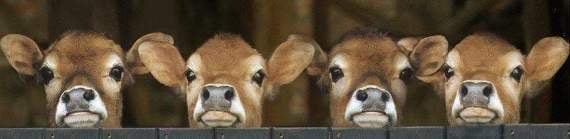
Pulling no punches in his presidential address at the Welsh Dairy Show in Carmarthen last week, North Pembrokeshire farmer, Mansel Raymond, reminded farmers present that the industry had come through three years of turbulent, difficult and extremely worrying times, but this period had shown that dairy farmers in Wales are tough, resilient, and always prepared to produce products of the highest possible quality, as well as meet the highest worldwide animal welfare standards.
Drawing on several years of experience as a member and official of the EU’s Copa Cogeca committee, he considered that, as suppliers into a food chain, farmers must now all work together to prevent the devastating turmoil of the last three years happening again.
He continued: “We all except we will get some unpredictability in prices, but I am pleased that milk buyers and producers are putting some models in place to help address the effects of extreme volatility - these models or formulas must become valuable risk managements tools.
“With just over 1,700 milk producers in Wales, the government has to do all it can to help our industry move forward into more sustainable times. Not least, the milk sector in particular is so important for the survival of our rural economies in Wales. It delivers employment from the farm gate to milk manufacturing, transportation and the service industries, all vital to the fabric of rural economies.
“The government has to take notice and consider the points being put forward by our industry during the Brexit negotiations. In particular, the fact that failure to sort out rights for overseas workers on our dairy farms will have a serious impact on the total industry - have no doubt there is a skill shortage in many farming sectors. This challenge cannot be ignored and Government has to take this seriously.
“With regard to animal health matters, the indications are that showing animals is going to become very difficult and costly with the newly-introduced TB rules in place. We all fully recognise that this disease causes real emotional and financial distress for the many farmers severely affected who are losing, at great cost, many of their very best animals.
“The Welsh government have been lobbied strongly on the consequences of their actions and now must be called upon to show leadership and prove to this industry that they are committed to an eradication programme that is efficient. It is time for urgent action and we cannot allow this human misery and the slaughter of our dairy and beef animals to carry on without the wildlife eradication issue being addressed.
“During my four years as chairman of Copa Cogeca - which is looked upon as the voice of European farming - I had the opportunity to meet milk producers across many European countries, but I remain convinced that the Welsh dairy industry is among the best in the world. In shows such as this the wonderful quality of our livestock stands out as our farmers meet top professional standards.”
Mr. Raymond concluded by saying “Our consumers can be very reassured with the choice and quality of our produce and we must continue to press home to our consumers the nutritional benefits that out products have to offer -let’s look forward to a more profitable and sustainable industry for the future.”
The show, which enjoyed excellent support from the farming community across South Wales, saw a welcome return of the Guernsey cattle but, on this occasion, there were no Dairy Shorthorn entries.
Show talk
At last week’s council meeting of the Pembrokeshire Agricultural Society, members heard reports in relation to the August County Show and how last minute changes were necessitated by adverse weather conditions.
General manager Jan Pearce said lessons in how to overcome unforeseen difficulties had been quickly learned and it was gratifying to note that the overall attendance at the event had not suffered.
Due to ongoing ground conditions, some of the main ring activities had to be changed and it was very unfortunate that the hugely attractive main show jumping competitions had to be cancelled in order to ensure the safety of the horses and riders.
The council expressed their appreciation to all stewards and helpers who had ensured that everything possible was seen to be done to meet the needs of the public.
Discussions with the whole range of livestock breeders and exhibitors were ongoing as were meetings with those taking up space for trade stands and other service providers.
Comments from the livestock judges had reflected well on all the quality aspects of the entries being shown and the Simmental cattle breeders in particular appeared delighted with the practical support that they had received for their Welsh show.
There could be no doubt that the working demonstration of robotic milking had attracted a great deal of public attention and it was pleasing to report that this element was to be retained for a further two years.
Mike Davies, chairman of the trustees, advised that the showground - well-situated within the rapidly expanding Withybush industrial/trading area - was becoming a major venue and there were now 24 companies making use of buildings and services that the showground were well able to provide.
He added that the organisers of the café, Sunday markets, car boot sales, go kart area, paint balling, ‘football’ golf and the tenants of office space were all showing positive results.
With ample parking available, events manager Sue Latham indicated that the fully-refurbished pavilion was becoming increasingly popular for weddings, trade fairs and corporate functions, community groups, clubs and society meetings, family parties and even for some school exams. Other buildings on the showground housed the annual catering exhibition, wedding fayres, the Young Farmers Queen’s Ball and the Pembrokeshire Hunt Ball to name just a few.
The eve of show religious service and the Harvest Thanksgiving at the pavilion last month had been particularly well-supported, as had been the County YFC Rally and the usual fun day provided for those youngsters with special needs, both held in May.
Coming up are the society’s annual dinner dance tonight (Friday), the centenary dinner of the NFU’s Pembroke County branch on Saturday, November 18, the National Call Duck show a week later, a huge Christmas Fayre with at least 70 trade stands on Sunday, December 10, and a service of Christmas carols supported by the Haverfordwest Male Voice Choir that evening in The Pavilion. An annual fixture for January is the All Wales Poultry Show organised by the Dyfed Society.
The society have a proud record of generously supporting a wide variety of good causes and this years beneficiary, as chosen by the president, Richard Cole, is that for research into Sepsis - a life-threatening illness caused by the body’s response to an infection and an alarming condition of which he himself had suffered.
Herself a leading figure in the equestrian world, mostly involving the Welsh breeds, Jan Pearce was wished well for her trip to Canada next week when she will be judging over three days at the 89th Royal Winter Fair in Toronto -the largest combined indoor agricultural fair and international equestrian competition in the world.
This event, it is said, is where Canadian and international breeders, growers and exhibitors are declared champions and where hundreds of thousands of attendees come to learn, compete, shop and have a great time with friends and family.
See, and be seen!
Herdsmen in North China’s Inner Mongolia autonomous region are being encouraged to attach reflective tape to livestock to prevent them from causing road accidents at night.
The regional traffic police bureau has launched a trial distributing the reflective tape free of charge to herders living near roads surrounding tourist resorts in the region’s five prefectures and cities.
The tape, made from PVC and reflective crystals, withstands wear and tear and is resistant to low temperatures.
Livestock wearing the tape around their legs can be seen from a distance of 200 meters, giving drivers enough time to respond, according the regional traffic bureau.
With increasing numbers of roads being built on the vast grasslands, grazing livestock, including horses, cattle and camels, pose a risk to traffic at night.
The region has reported more than 1,500 traffic accidents involving livestock since 2015, and up to 78 percent occurred at nigh - in one extreme case, 12 people were killed and 28 others injured when a semi-trailer crashed into an oncoming sleeping coach as it tried to avoid a horse on an expressway.
Not for girls?
Sally Ride, the American physicist and astronaut who became the first American woman in space, said: “For whatever reason, I didn’t succumb to the stereotype that science wasn’t for girls. I got encouragement from my parents. I never ran into a teacher or a counsellor who told me that science was for boys. A lot of my friends did.”
Comments
This article has no comments yet. Be the first to leave a comment.