

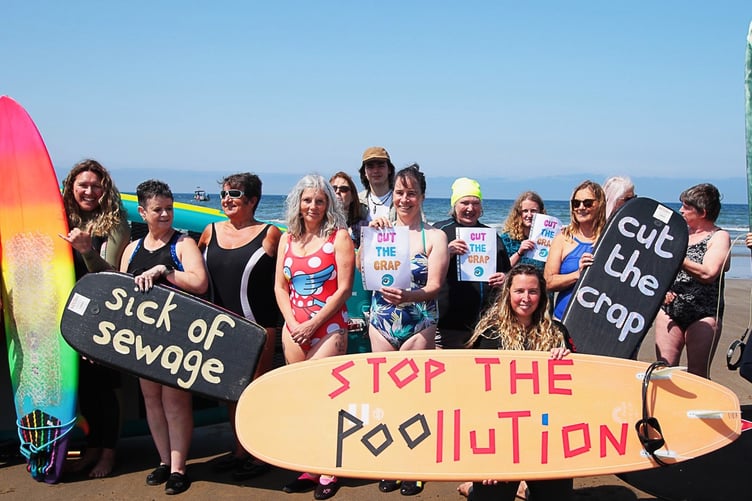
THE Pembrokeshire and Ceredigion constituency is recorded as the worst-affected area by sewage dumping, according to environmental data, published recently by Friends of the Earth Cymru.
The data reveals the stark gap between Welsh voters’ desire for climate action and action to protect nature and the reality of environmental issues across Wales, as the nation prepares for crucial Senedd elections.
The data, covering all 16 Senedd constituencies, shows that while 55 per cent of Welsh voters want faster government action on climate, and 72 per cent think the loss of nature and destruction of the environment should be one of our most important concerns, communities are facing a mounting environmental crisis on multiple fronts.
Water companies dumped raw sewage into Welsh rivers and seas 107,768 times during 2024, totalling 886,422 hours of pollution. That's the equivalent of 101 years of continuous sewage discharge.


The worst-affected areas are the most local: Ceredigion Penfro constituency: 15,096 spills lasting 163,441 hours; and Sir Gaerfyrddin constituency: 14,737 spills lasting 128,404 hours.
Nearly 800,000 people in Wales are at risk from flooding, which also threatens homes and businesses. 435,000 people are at risk from river and sea flooding and 357,200 from surface water flooding.
Pupils in 970 Welsh schools – 71 per cent of monitored locations – are exposed to harmful PM2.5 particulate pollution above World Health Organisation (WHO) safety guidelines. An additional 295 schools face dangerous Nitrogen Dioxide (NO2) levels.
Friends of the Earth Cymru asked councils what information they kept on contaminated and potentially contaminated sites, researched what information is publicly available on councils’ websites and looked at what studies have been undertaken in the past.
Over 45,000 potentially contaminated land sites were identified across Wales – but almost none have been inspected. This leaves the public with little or no information about the safety of land that could sit beneath homes, schools, parks and nature areas.
Meanwhile, 786,440 Welsh homes (58 per cent) have poor energy efficiency ratings (EPC D-G), leaving families struggling with high bills and cold, damp conditions. In some constituencies, 70 per cent of homes fall below acceptable standards.
Bus services have plummeted 49 per cent between 2010 and 2023 across Wales. This leaves communities car-dependent and undermines climate goals.
Road safety improvements present one bright spot, however, with 22 per cent fewer collisions (416 fewer incidents) on roads with 20 and 30mph zones between 2022 and 2024.
Haf Elgar, Director, Friends of the Earth Cymru, said: “Sewage in rivers, air pollution around schools and risks from flooding are not abstract statistics – our own lives and our wildlife is at risk from this mounting environmental crisis.
“This new constituency data from Friends of the Earth Cymru should serve as a rallying call for all political parties in Wales to act.
“Everyone should have the right to breathe clean air, live in a clean and safe environment in warm and dry homes, protected from extreme weather and with access to nature and local wildlife.”
Comments
This article has no comments yet. Be the first to leave a comment.