

THE Royal Society for the Prevention of Accidents (RoSPA) has warned that Wales is experiencing a worsening accidental death crisis, with fatalities rising by 43 per cent over the last decade.
RoSPA’s new Stronger, Safer Wales manifesto lifts the lid on a shocking surge in fatal accidents across Wales - a crisis happening behind closed doors, on rural roads, and in ordinary homes.
Here are the headlines:
• Accidental deaths are up 43 per cent in a decade.



• Wales now has one of the highest accidental‑death rates in the UK, sitting 22 per cent above the UK average.
• More than 1,200 people die every year in accidents that could have been prevented.
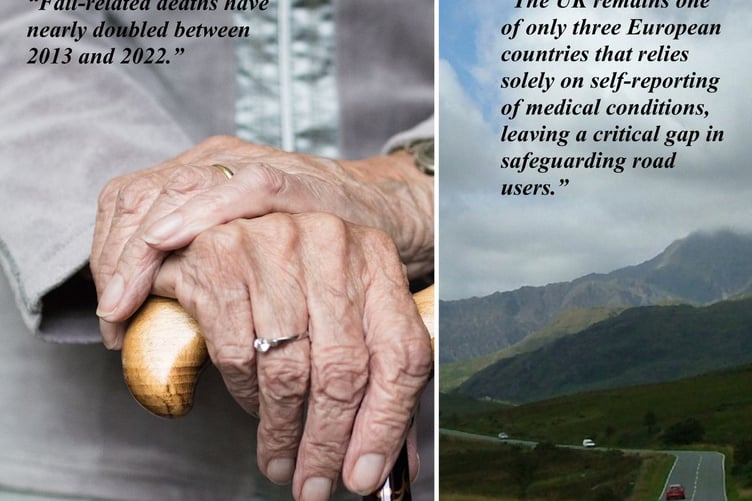
• Falls kill the most people (46 per cent), with poisoning not far behind (23 per cent). People in Wales around 24 per cent more likely to die from a fall than those elsewhere in the UK.
• Transport deaths are 18 per cent higher than the UK average, driven by dangerous rural blackspots.
• And Wales faces extreme risks you don’t see elsewhere: Machinery‑related deaths have risen by 147 per cent, and dog‑related accidental deaths are 227 per cent higher.
This is a real‑world story of families losing loved ones to everyday dangers - and a warning that without action, the numbers will keep rising.
In advance of the 2026 Senedd election, RoSPA’s manifesto spells out simple, practical fixes the next Welsh Government could take tomorrow to bring those numbers down: safer homes, safer roads, mandatory water‑safety education, better protection for workers, and targeted action in the communities being hit hardest.
The consequences extend far beyond the human toll: preventable accidents cost the NHS billions, remove tens of thousands from the workforce, and disproportionately harm people in deprived communities.
The charity is urging ministers and candidates to treat accidental harm with the same seriousness as other major health threats.
RoSPA is proposing a series of targeted interventions including safer home design standards, mandatory eyesight testing for drivers, improved road marking systems to protect motorcyclists, strengthened product safety enforcement, and mandatory water safety education in schools. The charity believes these measures will reduce preventable harm while easing pressure on overstretched public services.
In the foreword to the manifesto, RoSPA Chief Executive Officer Becky Hickman said:
“Accidental deaths and serious injuries have risen sharply in Wales. Over the past decade, accidental deaths have increased by 43 per cent, and the accidental death rate now stands 22 per cent higher than the UK average.
“Welsh citizens now face a heightened risk of suffering the profound impact that each loss or serious injury has on individuals, families and communities. This trend spans homes, workplaces, and the road network, affecting people of all ages, especially those in deprived areas.
“Accidents have consequences that extend beyond those directly affected. Accidents can force people out of the workforce, reducing productivity and tax revenues for vital public services, while placing additional pressure on the NHS by consuming beds funding, and staff time that could otherwise address other serious health needs.”
“Our manifesto presents evidence-based proposals across four key areas - Home and Product Safety, Occupational Safety and Health, Road Safety, and Leisure Safety (including drowning prevention),” she added.
Home and Product Safety
Homes are often seen as safe havens, yet are where most accidental deaths and serious injuries occur.
“Accidents remain closely linked to inequality, with serious falls - such as those from windows and stairs - occurring more often in unsafe housing, particularly within the private rented sector and temporary accommodation. However, many Welsh initiatives are short-term or locally restricted,” the charity observes, before making the following the following recommendations:
Safer by Design: Mandate adoption of RoSPA’s Safer by Design framework and incorporate BS-5395-1 stair safety principles into Welsh housing standards for new homes.
National Home Safety Programmes: Establish permanent programmes providing home risk assessments, safety advice, and essential equipment.
Product Safety Awareness: Tackle the sale of unsafe and counterfeit goods - including online - with targeted campaigns and consumer and business education.
Occupational Safety and Health
Workplace injuries also cause an annual loss of 1.8 million working days in Wales, according to RoSPA.
The charity warns: “During economic pressures, investment in workplace health and safety may appear less of a priority. Nonetheless, beyond the human impact, accidents carry significant economic costs.”
The Society campaigns for a comprehensive study on the scale and conditions of the Welsh gig economy - where people earn income by doing short-term, flexible jobs or tasks. This labour market is associated with precarity, low pay and weak protections.
It recommends tasking skills councils with creating transferable health and safety qualifications, tools and funding to support a flexible and dynamic workforce, as well as improved data sharing between Welsh police forces and the Health and Safety Executive via a formal Memorandum of Understanding.
Road Safety
Collisions on rural roads are significantly more likely to result in fatalities. Wales faces unique road safety challenges shaped by its geography. Rural roads, difficult terrain, and wet weather create slippery surfaces and reduce visibility, all of which heighten the risk of collisions.
Regarding the controversial ‘blanket’ 20mph limit, RoSPA commented: “We know that evidence-led policy interventions save lives. Default 20mph speed limits, introduced in 2023, represent a critical step forward and appear to be associated with improved road safety outcomes.”
The charity recommends empowering local authorities to set safe speed limits, including continued use of 20mph zones where appropriate to protect pedestrians, cyclists and communities.
Deteriorating vision is an under-recognised crash risk. RoSPA advocates the introduction of compulsory eyesight testing for all drivers every three years.
Motorcyclists are still 22 times more likely to be injured and 50 times more likely to be killed or seriously injured than motor-vehicle occupants, so RoSPA recommends a Safe System approach to road markings, including rollout of PRIME (Perceptual Rider Information for Maximising Expertise and Enjoyment)-style perceptual cues to reduce risks to motorcyclists on rural roads.
Leisure safety
RoSPA charges the next Welsh Government to endorse and support the next Wales Drowning Prevention Strategy which is due for release in July 2026. They also want to see classroom water safety education made mandatory using Water Safety Wales and Welsh Government funded resources.
“Classroom-based water safety education is essential, as swimming ability alone does not guarantee protection from the dangers of open water,” the charity says. “Children must be made aware of risks such as cold water shock and strong currents if they are to stay safe.
Following the disruption caused by the Covid-19 pandemic, RoSPA thinks it’s time to get back on track and “require all local authorities to develop water safety policies to manage local risks and hazards effectively.”
Becky Hickman said:
“Wales is facing a clear and escalating crisis of accidental deaths, and the evidence shows the situation is worsening year on year. Behind every statistic is a life that could have been saved with proven, practical interventions. We are calling on the next Welsh Government to make accident prevention a national priority, because coordinated action will save lives, reduce inequalities and relieve pressure on the NHS.”
With focus and leadership, RoSPA believes Wales can reverse rising accident rates and become one of the safest countries in the world.
Comments
This article has no comments yet. Be the first to leave a comment.