

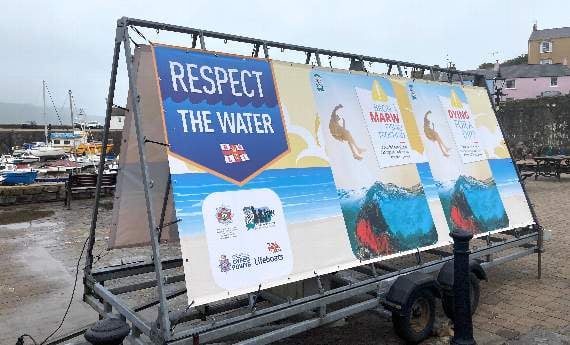
Following recent incidents in Pembrokeshire of young people jumping into disused quarry pools and other sites around the coast, (known as tombstoning), the RNLI, Dyfed Powys Police, Pembrokeshire County Council and Pembrokeshire Coast National Park are jointly highlighting the hidden serious dangers associated with this activity.
Those involved have also been filming themselves and sharing the footage across social media. In doing so they’ve been wrongly advertising the activity as an extreme sport alongside other safer and more regulated activities, which are attractive to those seeking outdoor adventure as part of their holidays and reasons to visit Pembrokeshire.
Roger Smith, RNLI area lifesaving manager and chair of the Pembrokeshire Water Safety Forum, said: “Whether it’s on the coast, or inland, we want people to be aware of the risks of jumping into water from height - known as ‘tombstoning’.
“The water is often shallower than it looks. Submerged items may not be visible and can cause serious life-changing injuries if you hit them. The water can be a lot colder than it looks, so the shock of cold water may also make it difficult to swim, and in the sea and rivers currents can sweep you away.


“It’s really important that people think about the possible dangers. We want people to be in a position to make better, more informed choices to keep themselves and others safe. The RNLI does not recommend‘‘tombstoning’. You should never allow others to pressure you into jumping. If you wish to jump into the water, first check for hazards such as rocks - especially hazards hidden below the surface. Water depths can change rapidly with the tide and waves: just because you saw somebody else jump in earlier doesn’t mean it is safe to do so now. Also, it is important to check for access, because it may be impossible to get out of the water. Coasteering or other activities with a registered company are a far safer alternative.”
Inspector Mike Llewellyn, from the Tenby Neighbourhood Policing Team, said: “Police officers all too often see the tragic consequences of people taking unnecessary, and ill-thought out spur of the moment risks. We understand that the water looks appealing, but as part of our moral and legal responsibility to protect lives, we must make everyone aware of the potential dangers.
“As fun as it seems, unregulated tombstoning is very dangerous. Worryingly we have seen some very close calls at various locations in Pembrokeshire where those jumping have been painfully close to serious injury. We want everyone to enjoy Pembrokeshire, whether you live here or are just visiting, but I can’t emphasise enough that you must do so safely. If you want to have fun along our coastline or anywhere with water, do so with a regulated and responsible body, and reduce significantly the prospect of a police officer having to visit a family home with devastating news.”
James Parkin, director of countryside, community and visitor services at Pembrokeshire Coast National Park Authority, added: “We understand the appeal of heading outdoors again, particularly after a difficult few months, however, we are urging members of the public not to put themselves in unnecessary danger by taking part in unregulated ‘tombstoning’.
“The water temperature in Pembrokeshire can be dangerously cold even during prolonged periods of warm weather. We are making a plea to parents to ensure that their children are aware of the dangers of ‘tombstoning’, and also of swimming anywhere which may contain hidden dangers such as underwater currents or sudden deep water. We strongly advise people to swim at a lifeguarded beach wherever possible.”
Comments
This article has no comments yet. Be the first to leave a comment.